The Current AI Stack Is Anthropomorphic Garbage — Let’s Rebase It!
Team
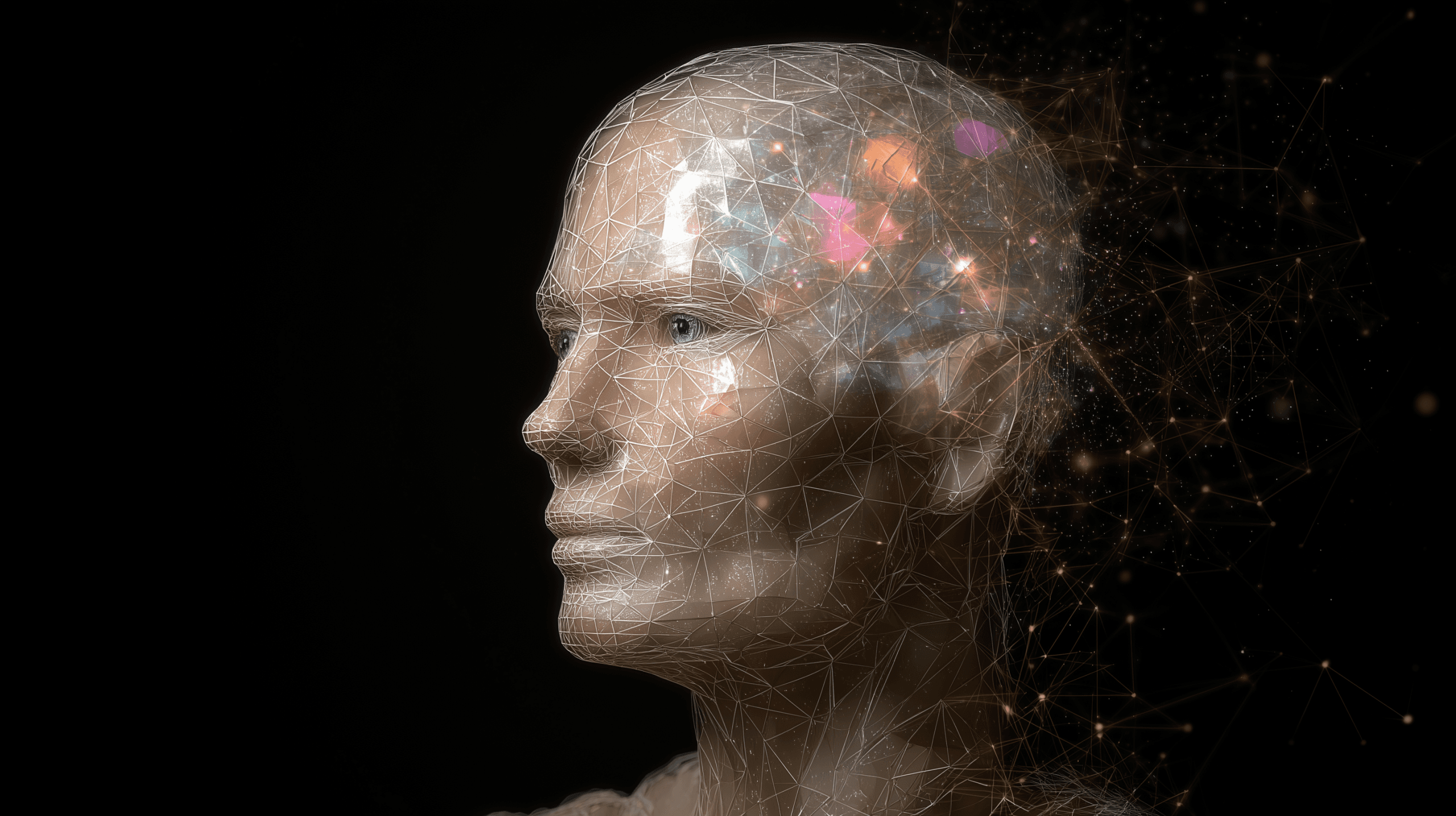
There is a comforting fiction spreading through AI discourse: that AI systems learn and that they remember. You see it everywhere — in agent frameworks, in product decks, in breathless posts about “long-term memory” and “self-improving agents.” It sounds intuitive. It feels human. And it is quietly sabotaging how we design software.
This isn’t a language nitpick. It’s a category error.
“Learning” and “memory” are biological metaphors, smuggled into engineering because they make complex systems feel legible. But when metaphors stop being bridges and start being beliefs, they distort reality. And right now, they are distorting how we think about AI.
Metaphors Are Architecture, Not Decoration
Metaphors don’t just describe systems — they shape them. The desktop metaphor gave us files and folders. The browser metaphor gave us pages and navigation. These worked because they were consciously interface metaphors, not claims about what the machine actually was.
But when we say AI learns or remembers, we are no longer talking about interfaces. We are projecting human cognition onto software — and expecting software to behave accordingly.
That’s where things break.
Human cognition is not a gold standard. It’s an evolutionary compromise. It is biased, lossy, emotional, context-fragile, and wildly inconsistent. Human memory is reconstructive, not archival. Human learning is slow, expensive, and shaped by survival, not correctness.
Why would we want software to inherit those properties?
Learning Is Not a Thing — It’s an Optimization Process
When people say an AI “learned,” what actually happened is far less mystical: A system optimized parameters to reduce error on a task.
That’s it.
No understanding crystallized. No internal model of the world emerged. No concept was “grasped.” Just gradient descent, heuristics, or rule updates pushing a system toward better performance under constraints.
Calling that learning is like calling a thermostat “self-aware” because it adjusts temperature.
This distinction matters because it collapses a dangerous fantasy: that AI systems will naturally generalize, grow wisdom, or improve themselves just by existing. That fantasy fuels the obsession with autonomous agents and AGI-adjacent thinking.
Once you drop it, a healthier frame appears.
AI systems are
- Optimizers, not learners
- Pattern engines, not thinkers
- Designed artifacts, not evolving minds
And that’s not a downgrade. It’s an engineering advantage.
Memory Is Not Recall — It’s Context Engineering
The same mistake happens with “memory.” Agent memory is not some inner continuity of experience. It is not recollection. It is not identity. It is state management. What people label as memory today is a stack of very concrete tools:
- structured state
- persistent context
- vector search
- retrieval pipelines
- append-only logs
- prompt scaffolding
This is not cognition. It’s infrastructure.
The goal is not to remember like a human remembers. The goal is to make the right information available at the right time, with the right scope, and the right guarantees.
Most “long-term memory” systems are simply clever ways of faking continuity — not because continuity is inherently valuable, but because some workflows need it.
So here’s the thing: memory is not a capability, it should be a design choice.
Why the Wrong Metaphors Slow Us Down
As long as we cling to learning and memory as cognitive analogies, we keep asking the wrong questions: Why doesn’t my agent get smarter over time? Why doesn’t it remember me like a person? Why does it forget context? Why isn’t it proactive?
These are anthropomorphic expectations — and they generate fragile systems, inflated promises, and inevitable disappointment.
Drop the metaphors, and suddenly the problems become tractable:
- How do we model context precisely?
- What state should persist — and what shouldn’t?
- Where does optimization help, and where does it hurt?
- What should never be automated?
That’s not less ambitious. That’s more rigorous.
This isn’t about being cold or reductionist. It’s about being honest — and honesty is the foundation of creativity that actually ships. The future of AI isn’t artificial minds roaming the digital world. It’s precise, powerful instruments embedded into human workflows — amplifying thinking without pretending to replace it.
Software doesn’t need to think. It needs to work. If we want better AI, we need better metaphors that make them useful.
That’s where real progress begins.
Agents Are Not the Endgame. They’re a Transitional Abstraction.
Here’s the mistake the industry is making: It treats agents as if they were proto-minds. They’re not. Agents are programs — executable cognitive scripts running on top of a much more fundamental layer: AI as general-purpose cognitive compute. And LLMs are not agents. They are processors. Which means the real missing piece isn’t “better agents.” It’s an operating system for cognition.
Toward a Rebased AI Stack
We don’t need to humanize machines. We need to rebase the stack.
A sane AI architecture looks like this:
-
Cognitive Processing — LLMs, diffusion, multimodal models
-
Cognitive Instruction — prompts, schemas, tools
-
Cognitive OS — scheduling, context arbitration, constraints, governance
-
Executables — agents (ephemeral, task-bound)
-
Co-Cognitive Systems/Applications — human × AI environments
-
Integration Layers — protocols, trust, interoperability
This is not anthropomorphic. It is architectural.
Stop Chasing Minds. Build Cognitive Infrastructure.
The future of AI is not artificial people. It is cognitive infrastructure — systems that think with humans, not like them. Systems that are explicit, bounded, composable, and honest about what they do.
Software doesn’t need to learn. It needs to be directable.
Software doesn’t need memory. It needs context discipline.
And AI doesn’t need more agents pretending to be minds. It needs a Cognitive OS worthy of the compute beneath it.
That’s the shift.
That’s the work.
That’s what we’re building.