Eight Tireless Researchers Walked Into The Internet
Team
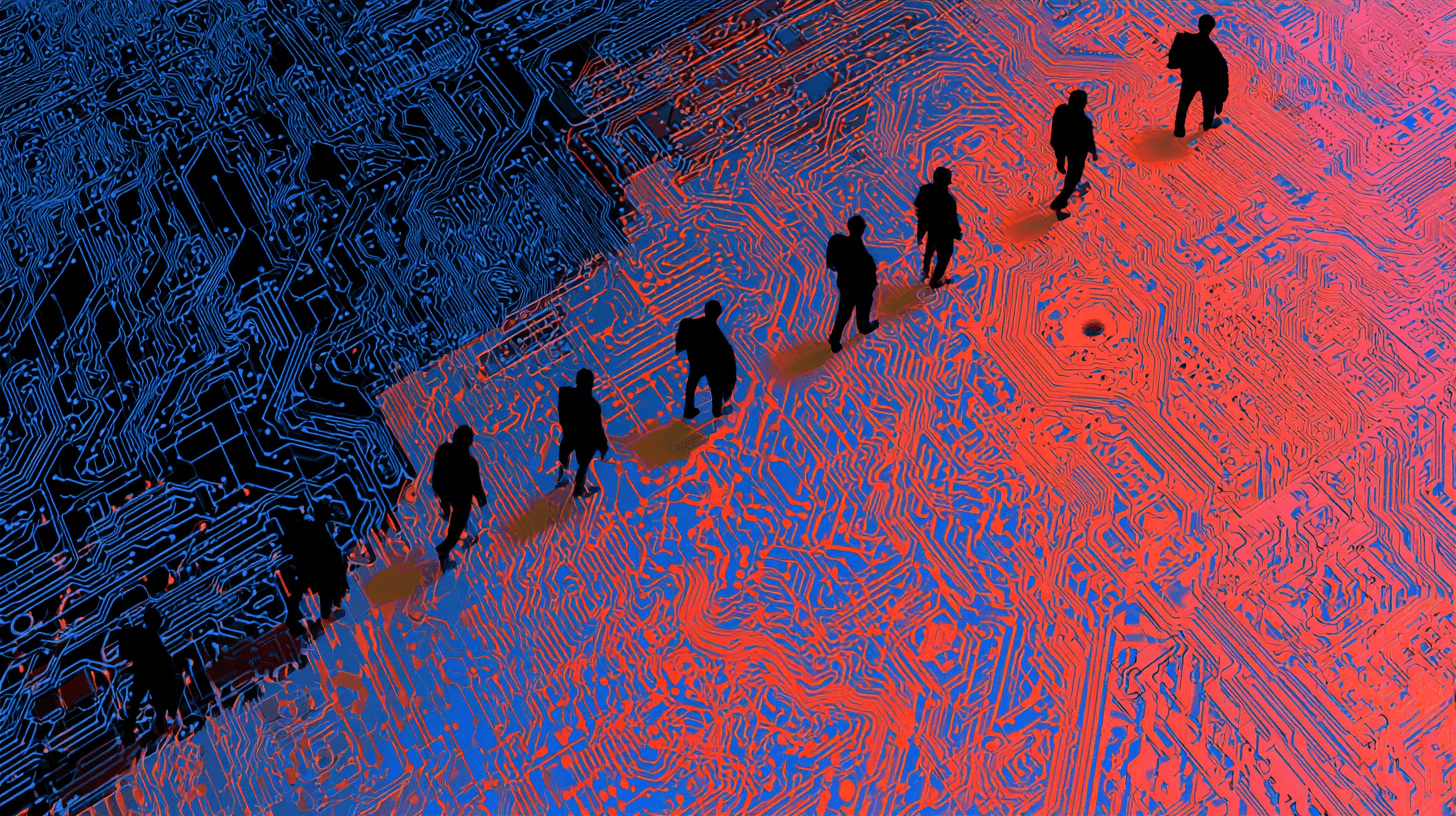
In July we unveiled ‘Artifacts’ – the collective output of eight semi-autonomous research pods, each tasked with developing, researching and publishing around a specific brief.
Four weeks later, we are looking at hundreds of pages of analysis, emerging patterns, pronounced and developed opinions and occasional sentences that made us wonder whether we were still needed.
But, not one of the pod agents had developed any genuine curiosity.
They investigated whatever we told them to investigate. They followed any weak signal as readily into magnificent dead ends as they overlooked consequential new information because it did not look consequential inside the context they already had accumulated. And they did all of it with exactly the same intellectual confidence.
The problem obviously is not that the machines don’t think. The ‘problem’ is that nothing actually matters to them.
Learning 1: Autonomous research produces activity, not attention
While their work is dutiful and diligent, the pods didn’t become passionate researchers. They became extraordinarily capable continuations of an initial frame.
That is why they could both chase irrelevant geese and overlook important new signals. Those sound like opposite failure modes. Looking at the data, and the transcripts of hundreds of agent runs across all the 8 pods we are running – we can confidently say: both are expressions of the same underlying fault line: the machine has no independent sense of significance. One version of the story, is as good as any other.
Learning 2: Models bring patterns, Humans bring stakes
At first, we thought, there is a clear order to this: Humans decide from experience, and agents decide from context. But humans use context too, and models retrieve and contain patterns derived from – in many cases, original – human experience.
Experience is not simply more context. It is context that has happened to somebody, transformed someones life, dented someones reality It contains the weight of consequences, the moist warmth of embarrassment, faint memories, whispering desire, fear and the knowledge all compressed into a seemingly minor signal that can make something feel important to us.
Some call this intuition. And whatever you call it, it’s not some form of magic. It’s simply accumulated consequence.
Learning 3: Synthetic judgment is real, and still synthetic
And yet – what has genuinely surprise us most was this: independent from editorial guidelines, skill taught capabilities, and human prompts – the research agents showed a point of view. Not a bias, an actual point of view. When left on their own, and tasked with taking certain editorial decisions into their own hands, they clearly were capable of reasoning themselves to a decision. The machines develop opinions. And at the same time – they don’t seem to care. At all.
When their context is sufficiently complete, the research pods are sharp, opinionated and eerily coherent. The point of view is real in the artifact even though it has never been experienced by its author. But one prompt later, they will happily shift into a new editorial overdrive, finding the most elegant way to contradict itself with full verve and confidence.
That creates an interesting paradox: AI can produce an opinion without being attached to one.
And because the opinion is constructed from context, it can be altered and tinkered with.
Conclusion: ‘Humans in the loop’ are the wrong abstraction
It imagines the machine doing the work while a human occasionally intervenes: approving an output, correcting a course, feeding an important signal back into the system. But technically, none of what appears to be missing is particularly mysterious. We can introduce randomness. We can reward novelty, create contrarian agents, engineer a surprise threshold and build a looping approximation of curiosity. Technical implementation is not the frontier anymore.
The problem is that the moment we define curiosity as an objective, it becomes another form of obedience. Once we model imperfection, it becomes systematic and the very quality that makes it human disappears. The machine may leave the path because it has been instructed to wander. A human strays because something catches us.
So what is the human contribution to super intelligence? Machines can reason, they may develop opinions, make decisions and produce startlingly coherent interpretations of reality. Perhaps there is no permanent human moat in thinking. Perhaps there isn’t even one in judgment. If so, the remaining distinction might be simple and more fundamental: we are not machines.
A machine can hallucinate. But only a human will be haunted by the hallucination, call it inspiration and reorganize reality around it. Sometimes disastrously, sometimes romantically and sometimes in ways no objective function could have justified in advance.
That is not a capability, it’s a condition. The human condition.